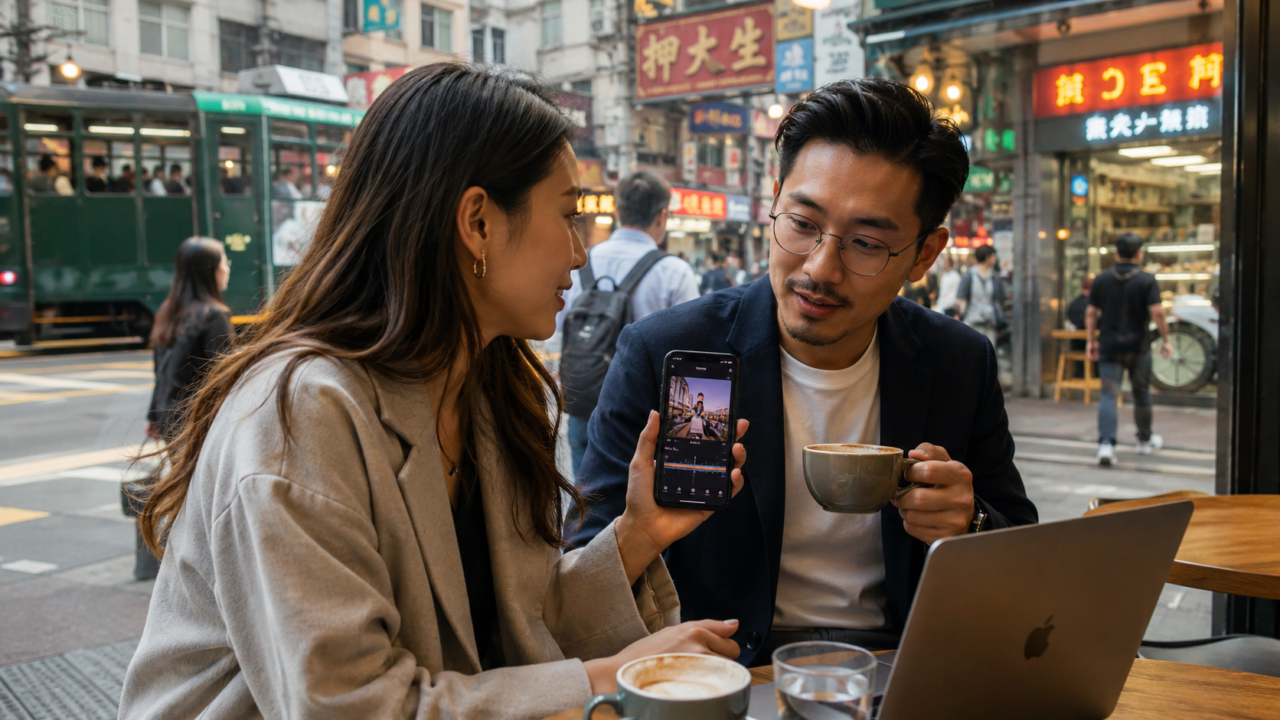
The rules of marketing in Hong Kong are changing.
For decades, brands relied on television commercials, magazine spreads, celebrity endorsements, and expensive digital advertising to reach consumers. The formula was straightforward: buy enough media exposure, capture attention, and hope it translated into sales.
In 2026, that strategy is becoming less effective.
Consumers have become more selective about what they watch, read, and trust. Ad blockers, subscription-based streaming services, privacy-focused technology, and constantly evolving social media algorithms have reduced the impact of traditional advertising. At the same time, audiences are spending more time watching creators who share honest product reviews, behind-the-scenes experiences, tutorials, and day-to-day life.
For many Hong Kong consumers, discovering a new restaurant, skincare product, travel destination, café, or fashion brand no longer starts with a Google search or a television commercial. It starts with scrolling through Instagram Reels, Xiaohongshu (Little Red Book), TikTok, or YouTube Shorts.
This shift has given rise to a new marketing model: creator-led marketing.
Unlike traditional influencer campaigns that focus on one-off sponsored posts, creator-led marketing treats creators as long-term partners who help shape brand stories, produce authentic content, and build lasting relationships with communities.
This approach is transforming how businesses of every size—from multinational corporations to local cafés in Mong Kok and independent beauty brands in Causeway Bay—connect with customers.
More importantly, it is changing what consumers expect from the brands they support.
In this guide, we’ll explore why creator-led marketing is becoming one of the most important business strategies in Hong Kong, the forces driving its growth, what successful brands are doing differently, and how businesses can adapt to stay competitive over the coming years.
What Is Creator-Led Marketing?
Many people use the terms creator marketing and influencer marketing interchangeably, but they are not the same.
Traditional influencer marketing often follows a simple formula:
A brand pays an influencer to promote a product in exchange for a fee or free merchandise. The campaign ends after one or two posts, and the relationship typically stops there.
Creator-led marketing takes a fundamentally different approach.
Instead of hiring creators simply to broadcast advertisements, brands invite them into the creative process. Creators become collaborators rather than advertising space.
They help brands:
- Develop campaign ideas.
- Produce authentic short-form videos.
- Create user-generated content (UGC).
- Test products before launch.
- Provide customer insights.
- Build communities around the brand.
- Represent the company over months or even years.
This model recognises that creators understand their audiences better than anyone else. They know which stories resonate, which formats perform well, and how to communicate naturally without sounding like an advertisement.
For brands, this means moving away from rigid scripts and embracing authentic storytelling.
The result is content that feels less like marketing and more like a recommendation from someone consumers already trust.
Creator-Led Marketing vs Traditional Influencer Marketing
| Traditional Influencer Marketing | Creator-Led Marketing |
|---|---|
| One-off campaigns | Long-term partnerships |
| Strict brand scripts | Creative collaboration |
| Focus on follower count | Focus on engagement and trust |
| Limited content reuse | Content repurposed across websites, ads, email, and social media |
| Short-term awareness | Long-term community building |
| Transactional relationships | Strategic partnerships |
The distinction may seem subtle, but it has significant implications.
Rather than asking, “How many followers does this creator have?” leading brands are now asking:
- Does this creator genuinely influence purchasing decisions?
- Does their audience trust them?
- Can they produce content our customers actually enjoy watching?
- Would we want this person representing our brand for the next year?
These questions shift the focus from reach to relationships.
Why 2026 Is a Turning Point for Hong Kong Brands
Several forces have converged to make 2026 a pivotal year for creator-led marketing in Hong Kong.
Consumer expectations have evolved, social media platforms have changed how content is discovered, and businesses are under greater pressure than ever to prove the return on every marketing dollar they spend.
The creator economy has also matured.
Five years ago, many companies still viewed creators as an experimental marketing channel. Today, they are increasingly seen as strategic partners who can generate awareness, engagement, customer trust, and sales.
This evolution is particularly significant in Hong Kong.
As one of Asia’s most digitally connected cities, Hong Kong combines high smartphone usage, fast internet, strong cross-border influences, and consumers who regularly engage with both Western and Chinese social media platforms.
Many residents use Instagram, Facebook, YouTube, LinkedIn, and WhatsApp while also browsing Xiaohongshu, WeChat, and other mainland platforms.
This creates a uniquely competitive environment where brands must communicate across multiple ecosystems simultaneously.
Traditional advertising alone is no longer enough.
Driver 1: Trust Has Become the Most Valuable Marketing Asset
Modern consumers have access to more information than ever before.
Before making a purchase, they often compare reviews, watch videos, browse social media, and ask friends for recommendations.
This behaviour has fundamentally changed how trust is built.
Consumers no longer rely solely on what brands say about themselves.
Instead, they look for independent voices.
A skincare routine demonstrated by a local beauty creator often feels more believable than a polished television commercial.
A café recommendation from a trusted food creator may carry more weight than a full-page newspaper advertisement.
A travel itinerary shared by someone exploring Hong Kong on foot can inspire bookings more effectively than a generic tourism campaign.
Trust has become the competitive advantage.
Creators earn that trust gradually by consistently producing useful, entertaining, or educational content over months and years.
Brands cannot buy that relationship overnight.
They can, however, collaborate with creators who have already built it.
This explains why many companies are investing in long-term creator partnerships instead of isolated influencer campaigns.
The goal is not simply to generate impressions.
It is to borrow—and contribute to—the trust creators have already established with their communities.
Driver 2: Traditional Advertising Is Delivering Lower Returns
Consumers encounter thousands of marketing messages every day.
As a result, many have developed what marketers call “advertising fatigue.”
People skip video ads, scroll past sponsored banners, ignore promotional emails, and pay less attention to conventional advertising than they did a decade ago.
At the same time, advertising costs continue to rise.
For businesses operating in Hong Kong—where commercial rents, wages, and customer acquisition costs are already high—every marketing dollar must work harder.
Creator-led marketing offers an attractive alternative.
Rather than interrupting consumers with promotional messages, creator content blends naturally into social media feeds.
It entertains before it sells.
Instead of feeling like an advertisement, it often feels like a conversation, a recommendation, or a personal experience.
This distinction matters because consumers are increasingly rewarding authenticity with their attention.
For small and medium-sized businesses that cannot compete with multinational advertising budgets, creator partnerships provide an opportunity to reach highly engaged audiences without the costs associated with large-scale traditional campaigns.
Driver 3: Short-Form Video Has Become the New Search Engine
One of the most significant shifts in digital marketing is the way consumers discover products.
Increasingly, people are not searching Google first.
They are searching social platforms.
Someone looking for the best coffee shop in Central might begin by watching Instagram Reels.
A tourist planning a weekend itinerary may browse Xiaohongshu for recommendations from local creators.
A consumer researching wireless earbuds could compare video reviews on TikTok or YouTube Shorts before ever visiting a retailer’s website.
This behaviour has transformed creators into trusted discovery engines.
Instead of optimising only for search engines, brands must now optimise for social discovery.
That means producing content that answers real questions, demonstrates products in everyday situations, and provides value beyond a sales pitch.
Creators excel at this because they understand the language, style, and trends of each platform.
They know how to capture attention in the first three seconds of a video, encourage viewers to watch until the end, and spark conversations in the comments.
For brands, these skills are increasingly valuable.
As social platforms continue prioritising engaging, authentic video content, businesses that partner with creators gain access not only to their audiences but also to their storytelling expertise.
In many cases, that expertise is becoming just as important as the products themselves.
Gen Z and Millennials Are Reshaping Buying Decisions
If trust is the new currency of marketing, then Generation Z and Millennials are setting its value.
Together, these two generations represent a significant share of Hong Kong’s consumer spending. They are digital natives who have grown up with smartphones, social media, and instant access to information. Unlike previous generations, they rarely make purchasing decisions based solely on advertisements.
Instead, they seek validation from people they trust.
Before buying a new skincare product, booking a hotel, trying a restaurant, or investing in a fitness membership, many consumers now watch reviews, compare recommendations, and read comments from real users.
This behaviour has created what marketers call the “trust economy.”
Consumers are no longer asking, “What does this brand say about itself?”
They’re asking:
- Who actually uses this product?
- Would I trust this person’s opinion?
- Does this recommendation feel genuine?
- Have they recommended similar products before?
These questions explain why creators have become such influential voices in the purchasing journey.
Unlike traditional advertising, creators build relationships over time. Their audiences see their successes, failures, honest opinions, and everyday experiences. That consistency creates credibility that brands struggle to replicate through conventional marketing.
For Hong Kong businesses, this means marketing is becoming less about broadcasting messages and more about joining conversations that consumers are already having.
Why Micro-Creators Are Outperforming Celebrities
One of the biggest misconceptions in marketing is that larger audiences automatically produce better results.
In reality, many campaigns tell a different story.
While celebrity endorsements can deliver massive visibility, micro-creators—typically those with smaller but highly engaged communities—often generate stronger engagement and more meaningful interactions.
Why?
Because their audiences tend to view them as relatable rather than aspirational.
A local food creator exploring hidden cafés in Sham Shui Po often feels more authentic than a celebrity promoting a restaurant they may never visit again.
A beauty creator documenting their genuine skincare journey usually inspires more confidence than a highly polished advertisement featuring a famous actor.
Micro-creators also tend to:
- Respond to comments.
- Answer followers’ questions.
- Build loyal communities.
- Share more personal experiences.
- Maintain closer relationships with their audiences.
For businesses, this often translates into:
- Higher engagement rates.
- Better click-through rates.
- More qualified leads.
- Lower cost per acquisition.
- Stronger customer loyalty.
This is particularly valuable for Hong Kong’s SMEs, where marketing budgets are often limited and every campaign must demonstrate measurable value.
Rather than investing the entire budget in a single celebrity partnership, many brands now collaborate with several creators who each speak to a different niche audience.
The combined effect is often broader, more authentic, and significantly more cost-effective.
Privacy Changes and Platform Algorithms Are Rewriting the Rules
Over the past few years, digital advertising has undergone one of its biggest transformations.
Privacy updates, changes to third-party cookies, and evolving platform policies have made it harder for advertisers to target consumers with the same level of precision they once enjoyed.
At the same time, social media algorithms have shifted their priorities.
Platforms increasingly reward content that keeps users engaged rather than content backed by the largest advertising budgets.
Today, algorithms favour signals such as:
- Watch time.
- Shares.
- Saves.
- Meaningful comments.
- Repeat viewing.
- Audience retention.
These are exactly the metrics that creators naturally optimise for.
Successful creators understand how to capture attention in the first few seconds of a video, tell compelling stories, and encourage conversations within their communities.
Their content often performs well because it entertains or educates first, while promoting products naturally within the story.
For brands, partnering with creators is no longer simply about accessing their audience.
It is about accessing their expertise in creating content that algorithms already favour.
Hong Kong’s Unique Digital Culture Gives Creators an Advantage
Hong Kong occupies a unique position within Asia.
Its consumers regularly navigate both Western and Mainland Chinese digital ecosystems.
A typical consumer may discover a café on Instagram, compare reviews on Xiaohongshu, watch a YouTube vlog about the experience, and finally complete their purchase through another platform.
This cross-platform behaviour creates both opportunities and challenges for marketers.
Brands can no longer rely on a single communication channel.
Instead, they must develop content that works across multiple platforms, languages, and audience preferences.
Local creators are particularly valuable because they understand these cultural nuances.
They know:
- Which trends resonate with Hong Kong audiences.
- How Cantonese humour differs from Mainland content.
- Which neighbourhoods are generating attention.
- What topics are becoming popular among local communities.
- How to adapt content for different social platforms.
This local knowledge is difficult to replicate through traditional advertising agencies or international campaigns.
It is one of the reasons why creator-led marketing feels more authentic and relevant to Hong Kong consumers.
Economic Pressure Is Forcing Smarter Marketing Decisions
Hong Kong remains one of the world’s most competitive business environments.
High commercial rents, increasing operating costs, cautious consumer spending, and growing competition from Mainland Chinese brands have encouraged businesses to examine every marketing investment more carefully.
The question is no longer simply:
“How many people will see this advertisement?”
Instead, business owners are asking:
- How many customers will this campaign generate?
- Can we reuse the content elsewhere?
- Will this partnership build long-term brand awareness?
- Can we measure real business results?
Creator-led marketing addresses these concerns because it often delivers multiple outcomes from a single investment.
A collaboration with one creator might produce:
- Short-form videos for Instagram Reels.
- Product demonstrations for TikTok.
- Lifestyle photography for the brand’s website.
- Customer testimonials.
- Behind-the-scenes footage.
- User-generated content that can be repurposed for paid advertising.
Rather than paying separately for photographers, videographers, copywriters, and advertising creatives, brands increasingly receive a complete library of authentic marketing assets.
This improves the overall return on investment while also making future campaigns more efficient.
For SMEs operating with limited budgets, this flexibility can make a significant difference.
Creator-Led Marketing Is Becoming a Business Strategy—Not Just a Marketing Channel
Perhaps the biggest change taking place in 2026 is that creator partnerships are no longer viewed as isolated marketing campaigns.
Forward-thinking businesses are integrating creators into product launches, customer research, brand storytelling, recruitment campaigns, employer branding, and even product development.
Creators are becoming long-term ambassadors who understand the company’s values, customers, and goals.
This shift changes the relationship from transactional to strategic.
Instead of asking creators to sell products, brands are inviting them to help shape the customer experience itself.
As consumers continue demanding greater transparency and authenticity, these partnerships are likely to become an increasingly important competitive advantage.
Businesses that build genuine relationships with creators today will be better positioned to earn consumer trust tomorrow.
From Theory to Reality: How Hong Kong Brands Are Already Putting Creator-Led Marketing into Practice
The shift toward creator-led marketing is no longer theoretical. Across Hong Kong, businesses ranging from multinational corporations to independent cafés, beauty brands, travel companies, and e-commerce platforms are already experimenting with long-term creator partnerships, user-generated content, and community-first campaigns.
Some have transformed their digital presence. Others have discovered new customer segments or achieved stronger engagement without dramatically increasing their marketing budgets.
Examining these examples reveals a common lesson: the most successful campaigns aren’t necessarily those with the biggest budgets—they’re the ones that create authentic connections between brands, creators, and communities.
How Hong Kong Brands Are Winning With Creator-Led Marketing
Creator-led marketing is no longer limited to global consumer brands with multimillion-dollar advertising budgets. Across Hong Kong, businesses of every size are embracing creators to tell authentic stories, build communities, and generate measurable business results.
While every campaign is different, the brands seeing the greatest success have one thing in common: they treat creators as long-term partners rather than one-off advertising channels.
Let’s look at what that looks like in practice.
Case Study 1: McDonald’s Hong Kong – Turning Everyday Moments Into Shareable Content
McDonald’s Hong Kong has long been recognised for adapting global campaigns to local culture, but in recent years its digital strategy has become increasingly creator-focused.
Instead of relying solely on polished television commercials, the brand frequently collaborates with lifestyle, food, and entertainment creators to produce content that feels native to social platforms.
Rather than saying, “Here’s our new burger,” creators are encouraged to show:
- First reactions.
- Behind-the-scenes experiences.
- Limited-edition menu tastings.
- Family outings.
- Late-night meals after work.
- Honest opinions on seasonal promotions.
These videos are designed to blend naturally into Instagram Reels, TikTok, and Xiaohongshu feeds, making them feel like recommendations instead of advertisements.
Key takeaway: Consumers relate more strongly to everyday experiences than scripted promotions.
Case Study 2: Cathay – Selling Experiences Instead of Flights
Travel marketing has changed dramatically since the pandemic.
Consumers no longer choose destinations based solely on glossy brochures or airline advertisements. They want to see real experiences through the eyes of people they trust.
Cathay has increasingly embraced creator partnerships to showcase complete travel journeys rather than simply promoting flights.
Travel creators document:
- Airport experiences.
- Lounge access.
- Cabin service.
- Local attractions.
- Food discoveries.
- Hidden neighbourhoods.
- Weekend itineraries.
The result is content that inspires travel while naturally positioning Cathay as part of the journey.
Instead of selling airline seats, the brand sells experiences.
This emotional storytelling is far more memorable than listing flight features or promotional fares.
Case Study 3: HKTVmall – Turning Shopping Into Entertainment
E-commerce has become fiercely competitive.
Consumers can compare prices within seconds, meaning convenience alone is no longer enough.
HKTVmall has responded by investing heavily in creator-driven product demonstrations, livestream shopping, unboxing videos, and educational content.
Creators explain:
- Why products are useful.
- How they solve everyday problems.
- Who they are best suited for.
- What customers should realistically expect.
This approach reduces uncertainty before purchase and builds greater confidence among shoppers.
For many products, especially beauty, technology, and household goods, seeing someone actually use an item is significantly more persuasive than viewing professionally photographed product images.
Case Study 4: Klook – Letting Local Creators Tell Local Stories
Travel platforms face a unique challenge.
Consumers don’t simply purchase tickets—they purchase experiences.
Klook has consistently partnered with travel creators throughout Asia, including Hong Kong, to showcase authentic itineraries rather than traditional tourism advertising.
Instead of producing highly scripted destination videos, creators often share:
- “48 hours in Hong Kong.”
- Hidden cafés tourists rarely discover.
- Affordable family activities.
- Hiking trails with spectacular views.
- Local festivals and neighbourhood events.
Because this content feels educational rather than promotional, audiences are more likely to save, share, and revisit it when planning future trips.
For Klook, every useful creator video continues attracting potential customers long after it is first published.
What Local SMEs Can Learn
Creator-led marketing isn’t only for multinational brands.
In fact, many of Hong Kong’s biggest success stories come from independent businesses with relatively modest budgets.
Consider a neighbourhood café opening in Sheung Wan.
Instead of spending HK$100,000 on traditional advertising, the owner could partner with ten carefully selected local creators.
Each creator produces unique content featuring:
- Signature drinks.
- Interior design.
- Food presentation.
- Customer experience.
- Nearby attractions.
- Behind-the-scenes stories with the owner.
Within weeks, the café has:
- Professional photography.
- Multiple short-form videos.
- User-generated content.
- Social proof.
- Increased online visibility.
- Content that can also be reused on its own social channels.
This demonstrates one of creator-led marketing’s greatest strengths:
One collaboration produces value long after the original post is published.
Measuring Success Beyond Likes
One of the biggest mistakes businesses make is measuring creator campaigns using only likes and follower counts.
While these metrics are easy to track, they rarely reflect genuine business performance.
Modern brands increasingly focus on outcomes that directly support business growth.
These include:
- Website traffic.
- Sales conversions.
- Customer acquisition cost.
- Repeat purchases.
- Email sign-ups.
- Brand searches.
- User-generated content created.
- Customer lifetime value.
For example, a creator with 15,000 highly engaged followers may generate more sales than someone with 500,000 passive followers.
This is why engagement quality has become far more valuable than audience size alone.
Why Long-Term Partnerships Deliver Better ROI
Many brands still approach creator marketing as individual campaigns.
They hire a creator once, publish sponsored content, and move on.
However, research consistently shows that repeated exposure builds stronger consumer trust.
When audiences see the same creator using a product over several months, recommendations feel more authentic.
The product becomes part of the creator’s lifestyle rather than a temporary advertisement.
Long-term partnerships also allow creators to understand a brand more deeply.
Over time they learn:
- Brand values.
- Customer pain points.
- Product features.
- Seasonal campaigns.
- Community expectations.
This results in content that feels increasingly natural and effective.
For brands, the benefits extend beyond engagement.
Instead of constantly searching for new creators, they build reliable relationships that become valuable business assets.
The Return on Investment Is Bigger Than Most Brands Realise
Many businesses initially evaluate creator marketing against advertising costs alone.
In reality, creator-led campaigns often deliver value across multiple departments.
One collaboration may generate assets that can be reused for:
- Paid social advertising.
- Website banners.
- Product pages.
- Email marketing.
- Recruitment campaigns.
- Investor presentations.
- Sales materials.
- Digital catalogues.
Viewed this way, creator-led marketing is not simply an advertising expense.
It is a content investment.
Every authentic video, photograph, testimonial, and review becomes part of a growing library of marketing assets that continues generating value long after the original campaign has ended.
This is one of the reasons creator-led marketing is increasingly viewed by Hong Kong businesses as a long-term business strategy rather than a short-term promotional tactic.
Building Sustainable Growth Through Community
Perhaps the greatest strength of creator-led marketing is that it shifts the focus away from campaigns and toward communities.
Traditional advertising often asks consumers to buy something.
Creators encourage consumers to belong to something.
That difference is significant.
Communities create conversations.
Conversations build trust.
Trust drives purchasing decisions.
Brands that understand this shift are moving beyond simply collecting customers.
They’re building loyal audiences that continue supporting the business long after individual campaigns have finished.
For Hong Kong companies navigating an increasingly competitive market, this community-first approach may prove to be one of the most valuable marketing investments of the decade.
The Challenges and Risks of Creator-Led Marketing
While creator-led marketing offers significant advantages, it isn’t without challenges. Brands that achieve the best results understand that successful partnerships require planning, trust, and clear expectations.
Recognising the potential risks from the outset allows businesses to build stronger, more sustainable creator programmes.
1. Balancing Creative Freedom with Brand Consistency
One of the biggest strengths of creator-led marketing is authenticity. Audiences follow creators because they enjoy their unique personalities and communication styles.
However, some businesses struggle with giving up creative control.
Overly detailed scripts often produce content that feels unnatural and overly promotional. On the other hand, providing no guidance at all can result in messaging that doesn’t accurately represent the brand.
The most successful partnerships strike a balance.
Brands should clearly communicate their objectives, key messages, legal requirements, and values while allowing creators to tell the story in their own voice.
2. Choosing the Wrong Creator
Follower count should never be the only selection criterion.
A creator with a smaller but highly engaged audience that closely matches your target customers will often outperform someone with a much larger following but limited relevance.
When evaluating creators, consider:
- Audience demographics
- Engagement quality
- Content style
- Brand fit
- Professionalism
- Consistency
- Previous partnerships
- Communication skills
The goal is to find creators who genuinely align with your business rather than simply offering the largest audience.
3. Protecting Brand Reputation
Creators are individuals with their own opinions, lifestyles, and public profiles.
As with celebrity endorsements, unexpected controversies can affect associated brands.
Businesses should develop clear partnership agreements covering:
- Brand guidelines
- Disclosure requirements
- Content approval processes (where appropriate)
- Usage rights
- Payment terms
- Professional expectations
These agreements protect both the brand and the creator while creating a transparent working relationship.
4. Measuring What Really Matters
Many businesses still judge campaigns by vanity metrics such as likes and impressions.
While these figures provide useful context, they rarely tell the full story.
Instead, brands should monitor metrics that reflect business performance, including:
- Website visits
- Product page views
- Sales conversions
- Cost per acquisition
- Customer lifetime value
- Repeat purchase rate
- User-generated content created
- Brand sentiment
- Returning customers
By focusing on meaningful outcomes rather than surface-level engagement, businesses gain a clearer understanding of campaign effectiveness.
Looking Ahead: The Future of Creator Marketing in Hong Kong
The creator economy is still evolving.
What has transformed marketing over the past five years is unlikely to remain unchanged over the next five.
Several emerging trends are expected to shape the future of creator-led marketing between 2027 and 2028.
AI Will Become Every Creator’s Assistant
Artificial intelligence is already helping creators streamline production.
Tasks such as video editing, subtitle generation, content planning, translation, thumbnail design, and performance analysis can now be completed more efficiently using AI-powered tools.
However, AI is unlikely to replace the human qualities that audiences value most.
Authenticity, personality, humour, lived experience, and genuine community relationships remain difficult to automate.
The creators who combine AI efficiency with human storytelling are likely to have the greatest competitive advantage.
Virtual Creators Will Continue to Grow
Computer-generated personalities and virtual influencers are becoming more sophisticated.
Luxury, fashion, gaming, and technology brands may increasingly experiment with virtual creators for certain campaigns.
However, for industries built on trust—such as healthcare, finance, food, travel, education, and local services—human creators are expected to remain the preferred choice because audiences value real experiences and honest opinions.
Social Commerce Will Continue Expanding
The line between content and commerce is becoming increasingly blurred.
Consumers can now discover a product, watch a review, compare alternatives, ask questions, and complete a purchase without leaving a social platform.
This seamless customer journey reduces friction and encourages impulse purchasing.
Brands that integrate creator content directly into the buying experience are likely to see stronger conversion rates than those relying on traditional advertising alone.
Communities Will Become More Valuable Than Followers
Follower counts will become less important than community quality.
Brands will increasingly evaluate creators based on:
- Meaningful conversations
- Audience loyalty
- Returning viewers
- Trusted recommendations
- Community engagement
Creators who build genuine relationships rather than chasing viral moments are likely to become the most valuable long-term partners.
How Hong Kong Brands Can Build a Successful Creator-Led Strategy
Whether you’re a multinational company or a local SME, the principles of creator-led marketing remain remarkably similar.
A practical roadmap includes:
1. Define Clear Objectives
Decide whether your priority is:
- Brand awareness
- Product launches
- Website traffic
- Sales
- User-generated content
- Community building
- Customer retention
Clear goals make it easier to measure success.
2. Focus on Audience Fit
Choose creators whose communities closely resemble your target customers rather than simply selecting those with the largest audiences.
3. Think Long Term
The strongest results usually come from ongoing partnerships rather than isolated sponsored posts.
Repeated exposure builds familiarity.
Familiarity builds trust.
Trust drives purchasing decisions.
4. Encourage Creative Freedom
Provide guidance without removing the creator’s authentic voice.
Remember, audiences are following the creator—not your marketing department.
5.Repurpose High-Performing Content
Excellent creator content should continue delivering value after publication.
Reuse it across:
- Your website
- Paid advertising
- Product pages
- Email campaigns
- Sales presentations
- Recruitment materials
- Social media
Doing so significantly increases the return on your investment.
6. Measure Business Outcomes
Track performance against meaningful commercial objectives rather than vanity metrics alone.
Continuous measurement allows campaigns to improve over time.
Why Platforms Like B2I Hub Matter
As creator-led marketing matures, brands need more than a list of social media profiles—they need an efficient way to discover creators, verify credibility, communicate directly, and build lasting partnerships.
This is where platforms such as B2I Hub can play an important role.
By connecting Hong Kong businesses directly with local creators, B2I Hub helps reduce unnecessary middlemen, encourages transparent collaboration, and makes it easier for brands and creators to build long-term working relationships.
For SMEs with limited marketing budgets, this approach can lower barriers to entry while giving creators greater control over their work, pricing, and professional opportunities.
As the creator economy continues to grow, platforms that prioritise trust, transparency, and meaningful partnerships are likely to become an increasingly important part of Hong Kong’s digital marketing ecosystem.
Frequently Asked Questions
What is creator-led marketing?
Creator-led marketing is a strategy where brands work with content creators as long-term creative partners rather than hiring them for one-off sponsored posts. Creators contribute ideas, produce authentic content, and help build lasting relationships with their communities.
How is creator-led marketing different from influencer marketing?
Traditional influencer marketing often focuses on short campaigns and promotional posts. Creator-led marketing emphasises long-term collaboration, storytelling, community engagement, and reusable content that delivers value beyond a single campaign.
Why are Hong Kong brands investing more in creators?
Changing consumer behaviour, the popularity of short-form video, increasing advertising costs, stronger demand for authentic recommendations, and the need for measurable marketing ROI are encouraging brands to work more closely with creators.
Are micro-creators better than celebrities?
Not always—but many micro-creators achieve higher engagement rates and stronger audience trust because their communities are often more focused and interactive.
Can small businesses benefit from creator-led marketing?
Absolutely.
Many SMEs achieve excellent results by partnering with local creators who have engaged niche audiences. These partnerships often cost significantly less than traditional advertising while producing valuable marketing content that can be reused across multiple channels.
Conclusion
Marketing has always evolved alongside consumer behaviour.
Today’s consumers expect more than polished advertisements and celebrity endorsements. They want transparency, authenticity, useful content, and recommendations from people they trust.
Creator-led marketing reflects this new reality.
It shifts the focus from broadcasting messages to building relationships, from chasing impressions to earning trust, and from one-off campaigns to long-term collaboration.
For Hong Kong businesses facing increasing competition, rising customer acquisition costs, and rapidly changing digital platforms, this approach represents more than a passing trend.
It represents a fundamental shift in how brands communicate with modern consumers.
The businesses that succeed over the coming years will not necessarily be those with the largest advertising budgets.
They will be the ones that understand their audiences, empower talented creators, and consistently deliver authentic stories that people genuinely want to watch, share, and remember.
Key Takeaways
- Creator-led marketing is transforming how Hong Kong brands connect with consumers
- Authenticity and trust now influence purchasing decisions more than traditional advertising
- Long-term creator partnerships often outperform one-off influencer campaigns
- Micro-creators can deliver exceptional ROI through highly engaged communities
- AI will improve efficiency, but genuine human storytelling will remain the foundation of successful creator marketing
- Brands that invest in meaningful creator relationships today will be better positioned to compete in Hong Kong’s evolving digital economy tomorrow
Ready to build your creator-led marketing strategy?
B2I Hub connects Hong Kong businesses directly with local creators — no agencies, no commissions, no middlemen.
Whether you’re a brand looking for authentic partners or a creator ready to be discovered, create your free profile today.